


Some pieces are designed to disappear Earthbound was not
This collection is built around a clear tension: the meeting point between raw, grounded mass and soft, controlled light. Heavy forms hold a quiet glow; objects that feel almost monolithic by day shift into something atmospheric by night. Earthbound is not a simple series of lamps. It is an ongoing study of how stone and light can coexist inside a single object and how that relationship can change the mood of a room.

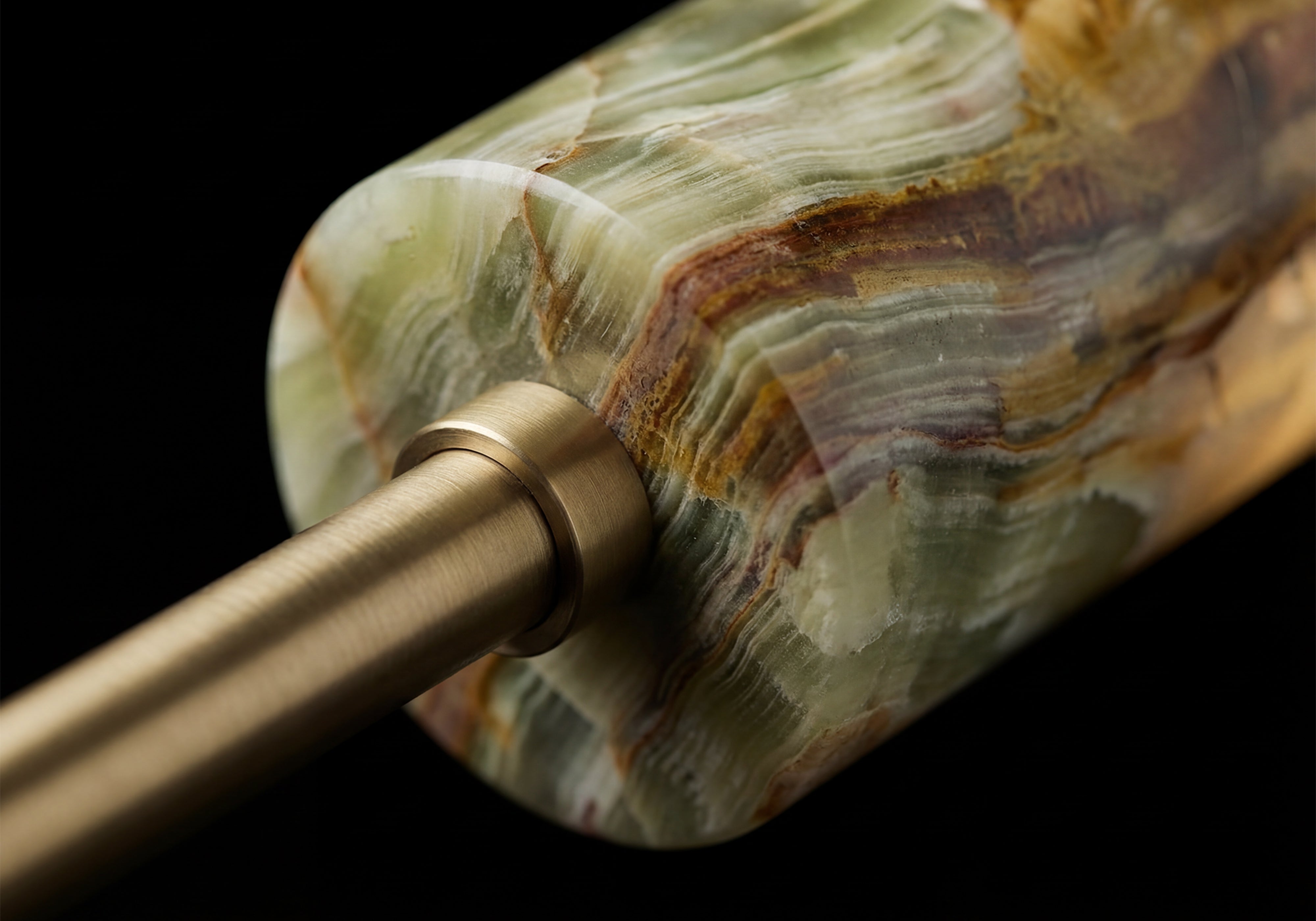
At the centre of Earthbound Collection 2026 is stone. Onyx, marble, and raw geological surfaces become the main characters, not supporting details. Instead of hiding veining, movement, or irregularities, the collection chooses to reveal them. Each natural fracture, each shift in tone, becomes part of the story of the piece. Stone is not a finish placed on top of a structure; it is the structure itself, and with it comes a strong emotional and architectural presence.
In several designs, translucent onyx behaves almost like a living skin. When the light is off, it reads as dense mineral: calm, opaque, undeniably heavy.
Once the light source inside is active, that same surface changes character. Veins start to glow softly, depth appears, and what once looked impenetrable begins to feel fluid and layered. A single object passes from mass to radiance over the course of a day. That transformation, from grounded stillness to warm presence, is what defines the collection.
This focus on real, tactile material is not accidental. Design research around biophilic interiors has, for years, pointed to the psychological effect of natural surfaces in everyday spaces. Stone, in particular, is associated with a sense of grounding, permanence, and calm. Earthbound leans into that understanding, allowing the authenticity of the material, its weight, its imperfections, its geological history, to play a central role in how each piece feels, both visually and emotionally.

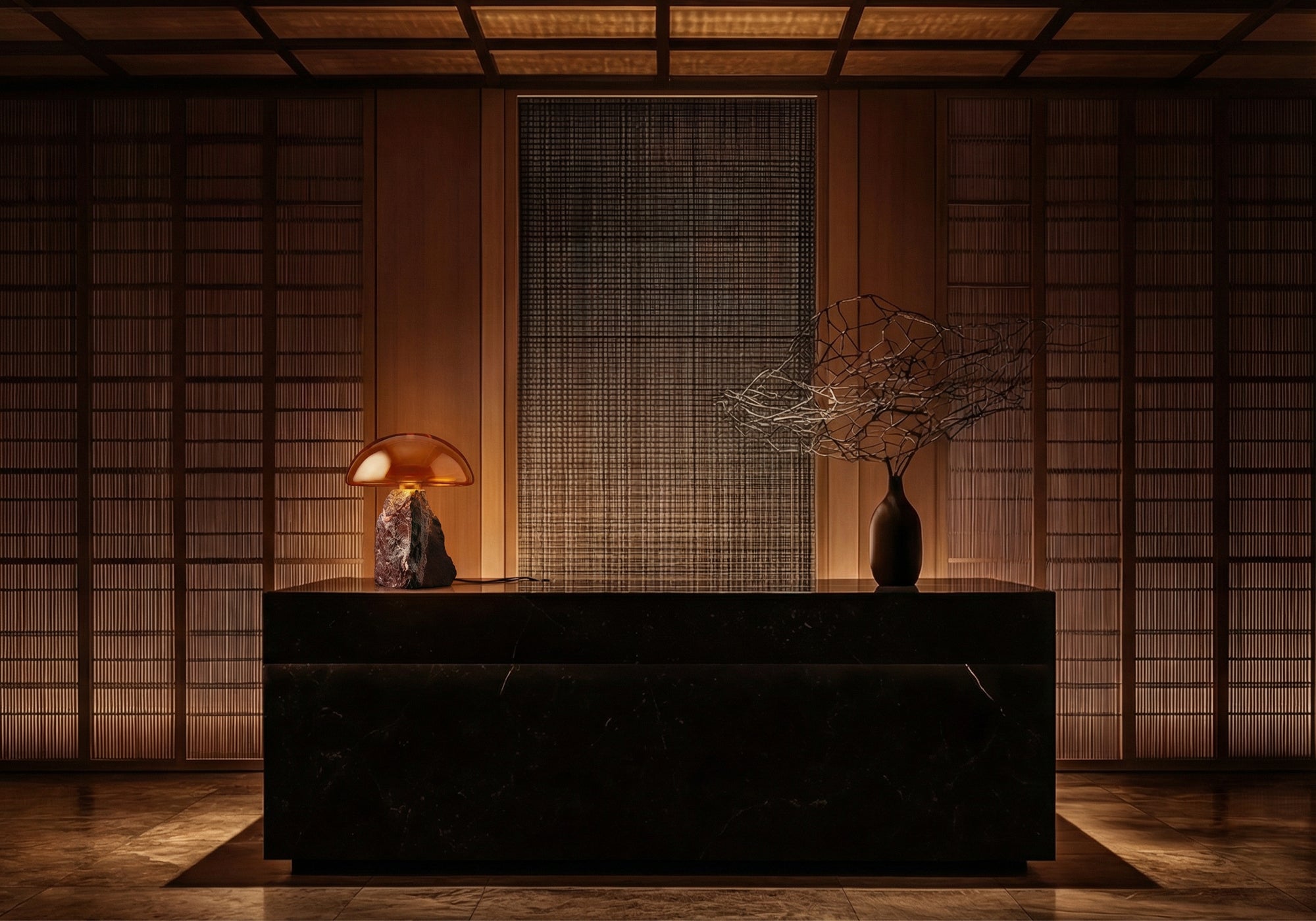
Earthbound was never created to compete with ceiling spots or task lighting. It was created to change how a space feels. The light temperature sits firmly in the warm, amber range, closer to the memory of fire or a late sun than to cold, neutral white.
These pieces do not push out harsh beams or flatten a room with uniform brightness. Instead, they cast a gentle, wrapped glow that settles around surfaces and creates depth in the shadows.
The intention is intimacy rather than intensity. Studies in lighting psychology and interior design increasingly support what people instinctively know: warmer, lower light levels tend to support relaxation, conversation, and a sense of comfort, while colder, higher light levels are better suited to alertness and task-focused environments. Earthbound responds to this shift in thinking.
Homes, cafés, lobbies, and private corners are increasingly designed as places to slow down in, to exhale in, to touch. In such spaces, light is asked to support calm and groundedness.
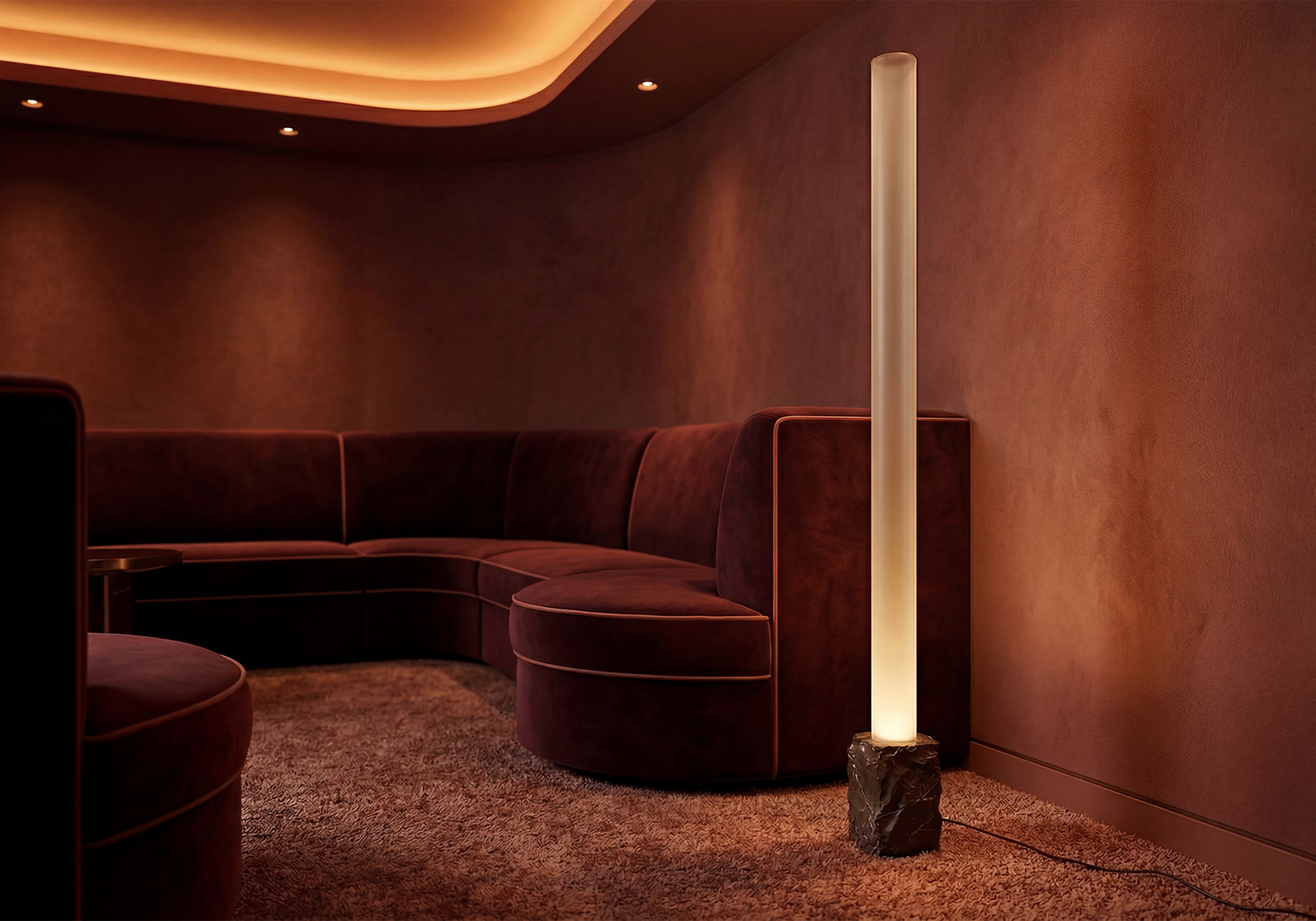
Earthbound pieces contribute to that atmosphere by offering a warm presence that can sit beside a sofa, rest on a console, or stand at the end of a corridor without demanding attention, yet quietly changing everything around them.
Monolithic Forms, Quiet Geometry
The geometry that runs through Earthbound Collection 2026 is deliberately restrained. Cylinders, slabs, vertical rods, domes and simple vertical forms return again and again, like a small vocabulary repeated in different ways. There is no surface ornament, no unnecessary shaping. By reducing each object to an essential outline, the collection allows material and proportion to speak first.
The result is a group of pieces that feel almost archeological, as though they have been carved out of larger masses rather than fabricated in separate parts. They sit naturally in interiors built on soft, earth-toned palettes, olive greens, plastered walls and mineral textures. In those contexts, Earthbound designs read less like accessories and more like small architectural elements. They anchor corners, define sightlines, and add a sense of gravity even when everything else in the room is quiet.
This approach echoes a broader move in contemporary interiors toward quieter forms and sculptural silhouettes. Rather than relying on complex details, Earthbound uses scale, proportion, and the honesty of material to create impact. The pieces hold their own in spaces shaped by what is often called “quiet luxury”: environments where every element is carefully chosen, but nothing feels loud.
Between Art and Function
Lighting today often exists somewhere between everyday object and sculpture, and Earthbound leans comfortably into that space. Whether suspended from a ceiling, mounted along a wall, or resting on a solid stone base, each piece in the collection is meant to stand as an independent object.
It does not lose its relevance when the light is off. The volume, the way the stone meets the metal, the proportions from every angle, all of these continue to hold visual weight long after night has passed.
This approach aligns closely with the rise of collectible design, where functional pieces are valued not just for what they do, but for what they are. In that context, objects are treated almost as limited artworks: built to be used every day, yet designed with the care and permanence of sculpture. Earthbound pieces carry that dual role.
They are reliable sources of warm, ambient light, but they are also discrete sculptures defined by honest material, clear geometry, and a strong, grounded presence. A question sits quietly inside each one: what if the object itself is as important as the light it gives?
Living with Earthbound
Earthbound Collection 2026 is for spaces that want more than a light source. It is for rooms that need a centre of gravity, an object that can sit quietly and still change everything around it.
On a console, a piece from the collection becomes a point of focus as you enter. At the end of a hallway, it turns a simple transition into a small destination. Beside a sofa or bed, it becomes a calm companion to slow evenings and unhurried conversations.
During the day, you live with the stone, the colour shifts, the veining, the way it occupies space. As the light comes on, you begin to live with the glow, the softness it spreads across surfaces, the way it deepens shadows instead of erasing them. Earthbound is not about switching something on and forgetting it. It is about living with an object that continues to reveal itself over time.
Earthbound Collection 2026 is now part of the Duleec world. Explore the pieces, study the stone, and find the one that feels closest to your own idea of what grounded light should be.